
Why One Short Reply Can Change The Tone Of A Conversation
Not every message gets a long response. Sometimes a person spends several minutes explaining their thoughts, sharing an opinion, or discussing plans. Then the reply comes back with just one word:
“WTV.”
At first glance, it looks simple. But that short response can carry very different meanings depending on the conversation.
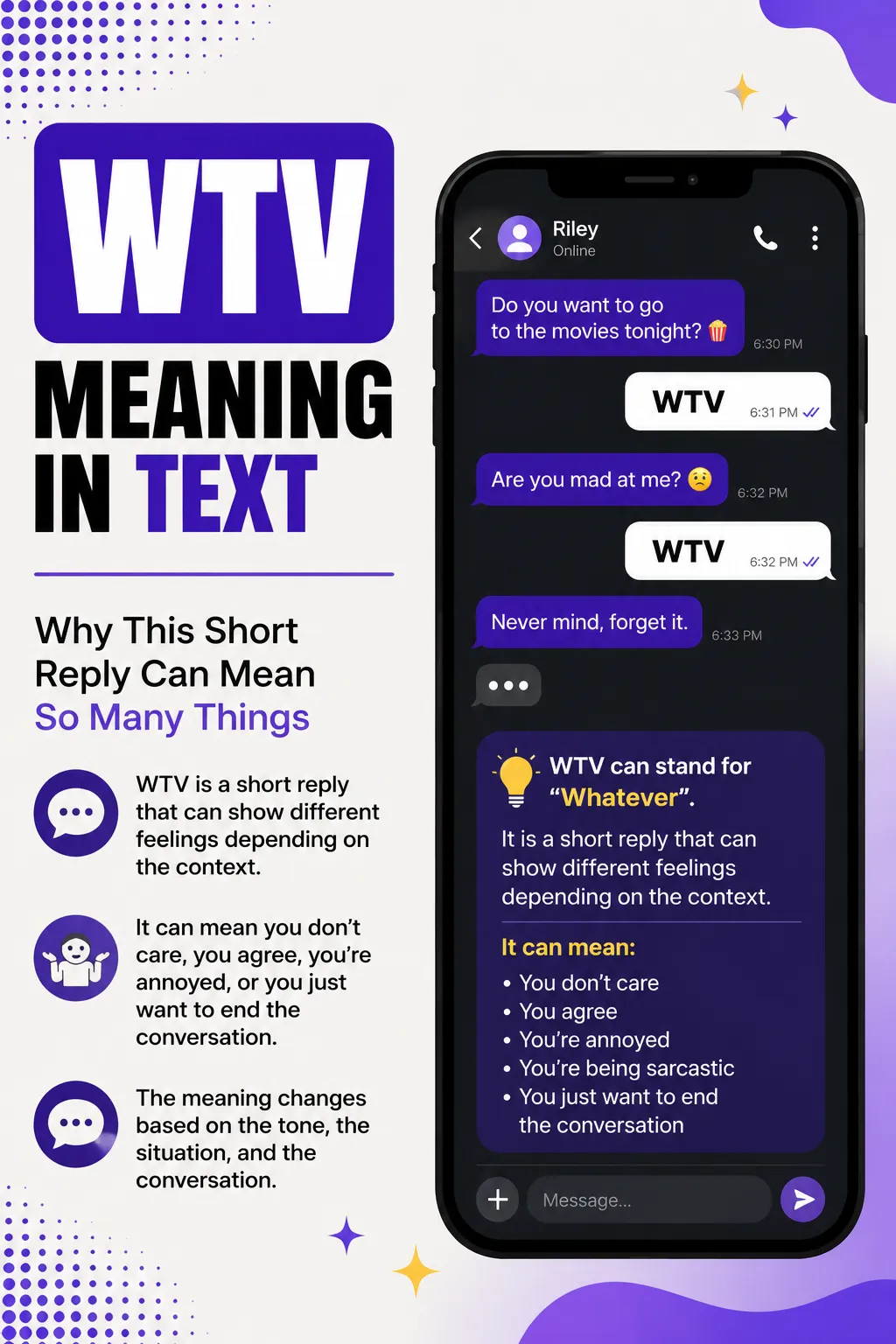
In some situations, WTV simply means the person is fine with any option. In other cases, it may suggest frustration, boredom, annoyance, or a desire to stop talking about the topic. Because the tone can change so much, WTV often creates confusion in text messages, Snapchat chats, Instagram comments, TikTok conversations, and group chats.
That’s one of the biggest reasons people search for wtv meaning in text. They understand the letters but are not always sure what the sender actually meant. Understanding WTV requires looking at both the words and the overall conversation.
WTV Meaning In Text: Quick Answer
WTV meaning in text stands for “Whatever.” It is commonly used when someone has no strong preference, wants to keep things casual, does not care which option is chosen, or wants to move on from a discussion. Depending on the conversation, WTV can sound friendly, neutral, annoyed, playful, or dismissive. This is why context and tone are important when understanding its meaning.
Quick Examples
- “WTV, I’m fine with either one.”
- “Pick the movie, WTV.”
- “WTV 😂”
- “Do WTV you want.”
What Does WTV Mean In Messages?
The Full Meaning Of WTV
The full form of WTV is:
Whatever
People use WTV as a shorter version of the word “whatever.”
Example:
“WTV works for me.”
Meaning:
“Whatever works for me.”
Why People Use WTV Instead Of “Whatever”
The main reason is speed.
Typing WTV takes less time than typing the full word.
Example:
Instead of writing:
“Whatever you want.”
Many people write:
“WTV you want.”
How WTV Changes The Tone Of A Message
Unlike many texting terms, WTV can completely change tone depending on how it is used.
Example:
“WTV 😂”
This sounds relaxed and playful.
Now compare it with:
“WTV.”
This may sound annoyed or uninterested.
Why Context Is So Important
Context often tells you what the sender really means.
Example:
Friend:
“Pizza or burgers?”
Reply:
“WTV.”
Meaning:
“I don’t mind.”
Another example:
Friend:
“Can we talk about this?”
Reply:
“WTV.”
This may suggest frustration.
You may be like it:
- HN Meaning in Text: What It Really Means in Messages, Chats
- HMU Meaning in Text: What It Really Means in Messages, Chats
- HM Meaning in Text: What It Really Means in Messages, Chats
- SB Meaning In Text: The Different Ways People Use It In Messages
The Different Ways People Use WTV
When Someone Has No Preference
This is one of the most common uses.
Example:
“WTV you choose is fine.”
The person genuinely doesn’t care which option is selected.
When Someone Wants To End A Discussion
Sometimes people use WTV because they no longer want to continue talking about something.
Example:
“WTV. Let’s move on.”
When Someone Is Being Casual
WTV often appears in relaxed conversations.
Example:
“WTV sounds fun.”
When Someone Feels Annoyed
A short WTV can sometimes show irritation.
Example:
“WTV. Do what you want.”
When Someone Is Reacting To A Situation
People occasionally use WTV when reacting to unexpected events.
Example:
“WTV happens, happens.”
Common Situations Where People Use WTV
Friend Conversations
Friend:
“Which restaurant should we choose?”
Reply:
“WTV works.”
Relationship Chats
Partner:
“What movie do you want to watch?”
Reply:
“WTV you want.”
Group Chats
Friend:
“What should we do tonight?”
Reply:
“WTV everyone wants.”
Snapchat Messages
Friend:
“Which photo should I post?”
Reply:
“WTV 😂”
Instagram Comments
User:
“Should I buy this?”
Comment:
“WTV you like best.”
Online Discussions
User:
“Which game should I get?”
Reply:
“WTV fits your budget.”
Real Examples Of WTV In Conversations
Casual Chat Examples
Friend:
“Coffee or tea?”
Reply:
“WTV.”
Friendship Examples
Friend:
“Where should we go?”
Reply:
“WTV works for me.”
Relationship Examples
Partner:
“What should we eat tonight?”
Reply:
“WTV you feel like.”
Social Media Examples
Comment:
“Choose whichever photo you want.”
Reply:
“WTV 😂”
Group Chat Examples
Friend:
“Movie or bowling?”
Reply:
“WTV everyone prefers.”
Everyday Messaging Examples
Friend:
“What time should we meet?”
Reply:
“WTV works best.”
Is WTV Friendly Or Rude?
When WTV Sounds Neutral
Example:
“WTV works.”
This simply shows flexibility.
When WTV Sounds Friendly
Example:
“WTV 😂”
The emoji makes the message feel lighthearted.
When WTV Sounds Annoyed
Example:
“WTV.”
A short reply without explanation can sound irritated.
When WTV Sounds Dismissive
Example:
“WTV. Do whatever.”
This may feel rude or uninterested.
How Emojis Change The Meaning
Emojis often make WTV sound softer.
Example:
“WTV 😊”
feels much friendlier than:
“WTV.”
Why WTV Became Popular Online
Quick To Type
Only three letters are needed.
Easy To Understand
Most internet users quickly recognize it.
Fits Fast Conversations
Modern messaging often favors short responses.
Popular On Social Media
Social platforms helped spread WTV to millions of users.
Common Among Younger Users
Many younger users prefer shorter internet terms.
WTV On Different Platforms
WTV On Snapchat
Often used in casual conversations.
Example:
“WTV you want.”
WTV On Instagram
Appears in comments and direct messages.
Example:
“WTV works.”
WTV On TikTok
Common in replies and comments.
Example:
“WTV 😂”
WTV On WhatsApp
Friends frequently use it during casual chats.
Example:
“WTV is fine.”
WTV In Online Communities
Used during discussions and debates.
Example:
“WTV happens.”
How To Respond When Someone Says WTV
Friendly Responses
- “Sounds good.”
- “Okay, let’s do that.”
- “Perfect.”
Clarifying Responses
- “Are you sure?”
- “You really don’t mind?”
- “Which option would you prefer?”
Funny Responses
- “Very helpful 😂”
- “Thanks for narrowing it down.”
Continuing The Conversation
Examples:
- “Let’s go with pizza.”
- “I’ll decide then.”
- “Thanks for letting me choose.”
WTV vs Similar Text Terms
| Term | Meaning |
| WTV | Whatever |
| IDC | I Don’t Care |
| IDK | I Don’t Know |
| TBH | To Be Honest |
| FR | For Real |
| NVM | Never Mind |
Understanding The Differences
WTV usually means whatever.
IDC means someone doesn’t care.
IDK means someone doesn’t know.
TBH introduces an honest opinion.
FR means something is genuine.
NVM means forget about what was previously said.
Common Mistakes People Make About WTV
Thinking WTV Is Always Rude
Many people use WTV casually without any negative intent.
Ignoring The Tone
The tone often changes the meaning completely.
Misunderstanding Casual Usage
Sometimes WTV simply means flexibility.
Reading Too Much Into The Message
Not every short reply is meant to be negative.
Similar Text Terms You Should Know
IDC – I Don’t Care
Shows a lack of preference or interest.
IDK – I Don’t Know
Used when someone is unsure.
NVM – Never Mind
Means forget about it.
TBH – To Be Honest
Used before sharing a genuine opinion.
FR – For Real
Means something is genuine.
IMO – In My Opinion
Used when expressing a personal opinion.
LMK – Let Me Know
Means update me later.
HMU – Hit Me Up
Means contact me.
LOL – Laugh Out Loud
Shows that something is funny.
BRB – Be Right Back
Used when stepping away temporarily.
When You Should Avoid Using WTV
Professional Emails
The full word is usually more appropriate.
Workplace Communication
Short internet terms may appear unprofessional.
Academic Writing
Schools generally prefer complete words.
Official Documents
Clarity is important.
Serious Discussions
Writing the full word may prevent misunderstandings.
Pros And Cons Of Using WTV
Advantages
- Quick to type
- Common online
- Easy to understand
- Useful in casual chats
- Works in many situations
Disadvantages
- Can sound rude
- Easy to misunderstand
- Too informal for professional settings
- Tone depends heavily on context
Frequently Asked Questions
What does WTV mean in text?
WTV most commonly means “Whatever.”
What is the full form of WTV?
The full form is Whatever.
Does WTV mean “Whatever”?
Yes. That is the most common meaning in texting and social media conversations.
Is WTV rude?
Not always. The tone and context determine whether it sounds friendly or rude.
How do I respond to WTV?
You can accept the flexibility, ask for clarification, or continue the conversation.
Is WTV commonly used on social media?
Yes. WTV is common on Snapchat, Instagram, TikTok, WhatsApp, and messaging apps.
Is WTV still popular in 2026?
Yes. It remains a widely used texting shortcut.
Should I use WTV in professional communication?
Generally no. Writing the full word is usually better in professional situations.
Final Thoughts
Understanding wtv meaning in text is easy once you know the full form. WTV stands for “Whatever” and is commonly used when someone has no strong preference, wants to keep things casual, or no longer wants to continue discussing a topic.
The reason WTV sometimes creates confusion is that the tone can change dramatically depending on how it is used. In one conversation it may sound friendly and flexible, while in another it may feel dismissive or annoyed.
That’s why context is so important. Looking at the conversation, the relationship between the people involved, and any emojis used will usually reveal the intended meaning. The next time you see “WTV” in a text message, Snapchat chat, Instagram comment, or group conversation, you’ll have a much better idea of what the sender is trying to say.