
Imagine you accidentally send the wrong message, miss a deadline, or apologize for a small mistake, and the other person replies:
“DW.”
It’s only two letters, but it can instantly change the mood of a conversation.
Many people see “DW” in text messages, social media chats, gaming communities, and messaging apps but aren’t always sure what it means. Like many internet abbreviations, DW was created to make communication faster while still expressing feelings and intentions.
Today, abbreviations play a huge role in online conversations. Whether you’re chatting on WhatsApp, Instagram, Snapchat, Messenger, Discord, or TikTok, you’ll likely encounter short forms like DW, BTW, TBH, and IDK regularly.
If you’ve searched for “dw meaning in text”, this guide explains exactly what DW means, how people use it, and why it remains one of the most popular reassuring expressions in online communication.
What Does DW Meaning in Text?
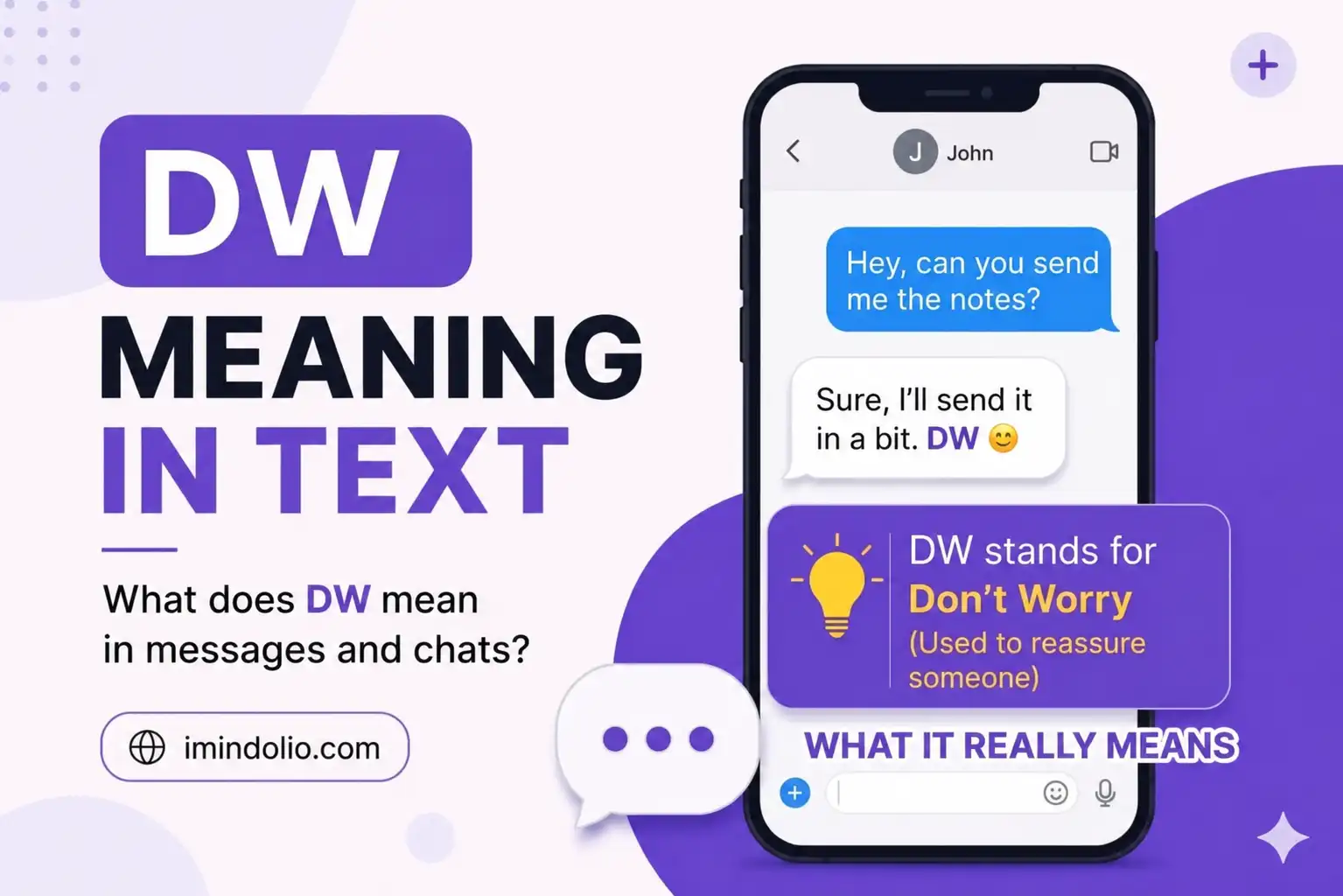
In texting and online conversations, DW usually stands for “Don’t Worry.” It is a common abbreviation people use to reassure someone, reduce stress, or let them know that everything is okay.
Examples:
- “DW, it’s fine.”
- “DW about it.”
- “DW, I already handled it.”
- “DW, no problem.”
The phrase is generally used to comfort someone after they’ve apologized, expressed concern, or worried about a situation.
In most online conversations, DW carries a positive and reassuring tone.
The Most Common Meanings of “DW”
1. DW = Don’t Worry (Most Common Meaning)
This is by far the most common meaning of DW in texting.
People use it to reassure others and make them feel more comfortable.
Examples:
- “DW, it wasn’t your fault.”
- “DW, I understand.”
- “DW, everything worked out.”
You’ll commonly see this usage on:
- Snapchat
- Messenger
- Discord
- TikTok
2. DW as a Reassurance Phrase
Beyond the literal meaning, DW functions as emotional reassurance.
Sometimes people simply want to tell someone that a mistake or problem isn’t a big issue.
Examples:
- “DW, mistakes happen.”
- “DW, take your time.”
- “DW, we’ll figure it out.”
This supportive use makes DW one of the friendliest internet abbreviations.
3. Rare Alternative Meanings
In certain industries or niche communities, DW can occasionally have different meanings.
However, in texting and social media conversations, DW almost always means Don’t Worry.
This is why context remains important when interpreting abbreviations.
Why Do People Use “DW” Instead of Typing “Don’t Worry”?
Faster Typing
Typing two letters is much faster than typing an entire phrase.
Casual Conversations
Friends and family often prefer quick, informal communication.
Mobile Messaging Habits
Most texting happens on smartphones where speed matters.
Social Media Culture
Internet users frequently shorten common phrases.
Quick Emotional Reassurance
DW instantly communicates comfort and reassurance.
Who Commonly Uses “DW”?
Teenagers & Gen Z
Younger users frequently use DW in daily conversations.
Friends & Family
DW is especially common between people who already know each other well.
Social Media Users
Instagram, TikTok, Snapchat, and Messenger users often use DW naturally.
Online Communities
Forums, Discord servers, and chat groups regularly feature DW.
Gamers & Messaging App Users
Gaming communities use DW to keep conversations quick and friendly.
How “DW” Is Used in Real Conversations
Friends & Casual Chats
Examples:
- “DW, it’s okay.”
- “DW about yesterday.”
- “DW, I understand.”
WhatsApp Conversations
Examples:
- “DW, I’ll handle it.”
- “DW, take your time.”
- “DW, we can reschedule.”
Instagram & Snapchat Messages
Examples:
- “DW, your post looks great.”
- “DW, nobody noticed.”
Gaming Communities
Examples:
- “DW, we’ll win next round.”
- “DW, mistakes happen.”
Online Forums
Examples:
- “DW, that’s a common issue.”
- “DW, here’s how to fix it.”
Group Chats
Examples:
- “DW, I’ll bring snacks.”
- “DW, I already booked it.”
You may be like it: SMT Meaning in Text : What It Really Means in 2026
ASL Meaning in Text: What It Really Means in Messages, Chats
BTW Meaning in Text: What It Really Means in Messages, Chats
Examples of “DW” in Sentences
Friendly Examples
- “DW, I’ll wait.”
- “DW, you’re good.”
- “DW, no rush.”
Supportive Examples
- “DW, everyone makes mistakes.”
- “DW, things will improve.”
- “DW, you’ll do great.”
Funny Examples
- “DW, my cooking survived.”
- “DW, the pizza wasn’t judging you.”
- “DW, we’re all confused.”
Social Media Examples
- “DW, your video was awesome.”
- “DW, you’ll get more followers.”
- “DW, the comment wasn’t serious.”
Everyday Conversation Examples
- “DW, I already paid.”
- “DW, I found it.”
- “DW, I’ll call later.”
Difference Between DW and Similar Texting Terms
| Term | Meaning |
| DW | Don’t Worry |
| NVM | Never Mind |
| TBH | To Be Honest |
| IDC | I Don’t Care |
| BRB | Be Right Back |
DW vs NVM
DW reassures someone.
Example:
“DW, it’s okay.”
NVM means forget about something.
Example:
“NVM, I figured it out.”
DW vs IDC
DW sounds caring and supportive.
IDC can sometimes sound indifferent.
Example:
“IDC.”
This creates a very different tone from DW.
DW vs TBH
TBH introduces honesty.
Example:
“TBH, I liked it.”
DW provides reassurance.
Example:
“DW, I liked it.”
Is “DW” Friendly, Rude, or Dismissive?
Friendly Use
Most people use DW in a friendly way.
Example:
“DW, everything’s fine.”
Supportive Use
DW often helps reduce anxiety.
Example:
“DW, we’ll solve it together.”
Neutral Use
Sometimes it’s simply informational.
Example:
“DW, it’s already done.”
Situations Where It May Feel Dismissive
Tone matters.
For example:
“DW.”
A very short response without additional context can sometimes feel cold or dismissive.
Adding a few extra words usually makes the message feel warmer.
Example:
“DW, it’s totally okay.”
How to Respond When Someone Says “DW”
Casual Replies
- “Okay.”
- “Good to know.”
- “Thanks.”
Friendly Replies
- “Thanks, I appreciate it.”
- “Glad to hear that.”
- “That’s reassuring.”
Thankful Replies
- “Thank you.”
- “I appreciate your understanding.”
- “Thanks for helping.”
Professional Replies
- “Thank you for understanding.”
- “I appreciate the clarification.”
- “Understood.”
Why “DW” Is So Popular Online
Short and Convenient
Only two letters are needed to express reassurance.
Easy to Understand
Most internet users recognize DW instantly.
Creates Positive Tone
The abbreviation generally carries supportive energy.
Saves Time While Typing
It helps conversations move quickly.
Common Across Platforms
DW works on nearly every messaging platform.
Common Misunderstandings About “DW”
Thinking It Means Something Negative
DW is usually positive and reassuring.
Assuming It Is Rude
The abbreviation itself isn’t rude.
Misreading the Tone
Tone depends on context and wording.
Confusing It With Other Abbreviations
People sometimes confuse DW with:
- NVM
- IDC
- TBH
- BTW
Each abbreviation serves a different purpose.
Is “DW” Popular on Social Media in 2026?
Instagram Usage
DW regularly appears in comments and direct messages.
TikTok Usage
Users often reply with DW in comment sections.
Snapchat Usage
Quick abbreviations fit perfectly with Snapchat’s communication style.
WhatsApp & Messenger Usage
DW remains common in everyday conversations.
Online Communities
Discord servers, gaming groups, and forums still use DW frequently.
In 2026, DW continues to be one of the most recognizable reassurance abbreviations online.
Similar Internet Slang Terms You Should Know
NVM
Never Mind
Example:
“NVM, I found it.”
IDK
I Don’t Know
Example:
“IDK what happened.”
TBH
To Be Honest
Example:
“TBH, I agree.”
NGL
Not Gonna Lie
Example:
“NGL, that’s impressive.”
BRB
Be Right Back
Example:
“BRB, dinner time.”
TTYL
Talk To You Later
Example:
“Need to go, ttyl.”
FR
For Real
Example:
“That’s cool fr.”
LOL
Laugh Out Loud
Example:
“LOL, that’s hilarious.”
WYD
What Are You Doing?
Example:
“WYD tonight?”
BTW
By The Way
Example:
“BTW, thanks again.”
When You Should Avoid Using “DW”
Professional Emails
Full wording usually appears more professional.
Formal Business Communication
Professional settings often require complete sentences.
Academic Writing
Texting abbreviations are generally inappropriate in formal writing.
Serious Discussions
Sensitive topics may deserve more detailed reassurance.
Example:
Instead of:
“DW.”
Consider:
“Don’t worry, we’ll work through this together.”
Advantages and Disadvantages of Using “DW”
Advantages
- Quick reassurance
- Friendly tone
- Saves typing time
- Easy to understand
- Widely recognized
Disadvantages
- Can sound dismissive in some situations
- Too casual for formal communication
- May confuse people unfamiliar with internet slang
- Tone can be misinterpreted
How Texting Abbreviations Like DW Have Changed Online Communication
Faster Messaging Culture
People now communicate more quickly than ever before.
Emotional Communication Through Short Forms
Abbreviations can convey feelings in only a few characters.
Social Media Influence
Platforms encourage brief and efficient communication.
Evolution of Internet Language
Language continues adapting to digital habits and modern technology.
DW is a great example of how short abbreviations can communicate reassurance, support, and kindness with minimal effort.
FAQs
What does DW mean in text?
DW usually means “Don’t Worry.”
Does DW mean don’t worry?
Yes. That is the most common texting meaning.
Is DW rude?
No. DW is generally friendly and reassuring.
How do you reply to DW?
You can reply with:
- “Thanks.”
- “I appreciate it.”
- “Good to know.”
Is DW commonly used on social media?
Yes. It’s widely used on Instagram, TikTok, Snapchat, and messaging apps.
Can DW be used in professional messages?
It can, but the full phrase “Don’t worry” is usually more appropriate.
Why do people use DW instead of don’t worry?
Because it’s faster and easier to type.
Is DW still popular in 2026?
Yes. DW remains a common abbreviation across social media platforms.
What is the difference between DW and NVM?
DW reassures someone, while NVM means “Never Mind.”
Final Thoughts
Understanding the DW meaning in text is simple once you know the context. In most online conversations, DW stands for “Don’t Worry” and is used to reassure someone, reduce stress, or communicate support.
Its short length, positive tone, and ease of use have made DW a popular part of modern internet slang. Whether you’re chatting with friends, commenting on social media, or participating in online communities, you’ll likely continue seeing DW used frequently.
The next time someone replies with “DW,” you’ll know they’re probably trying to make you feel more comfortable and let you know that everything is okay.