
You open Instagram and see your friends traveling to beautiful destinations, attending concerts, trying new restaurants, or hanging out together.
Suddenly, you start wondering if you’re missing out on something exciting.
Then someone comments:
“That’s pure FOMO.”
If you’ve seen this term in messages, captions, comments, or online discussions, you may wonder what it actually means and why people use it so often.
Social media has made it easier than ever to see what other people are doing in real time. As a result, many people experience feelings of being left out or missing exciting opportunities. That’s one reason why searches for “fomo meaning in text” have become increasingly popular.
Whether you saw it on TikTok, Instagram, Snapchat, WhatsApp, or a group chat, understanding FOMO can help you better understand both modern internet slang and a common human emotion.
What Does FOMO Meaning in Text?
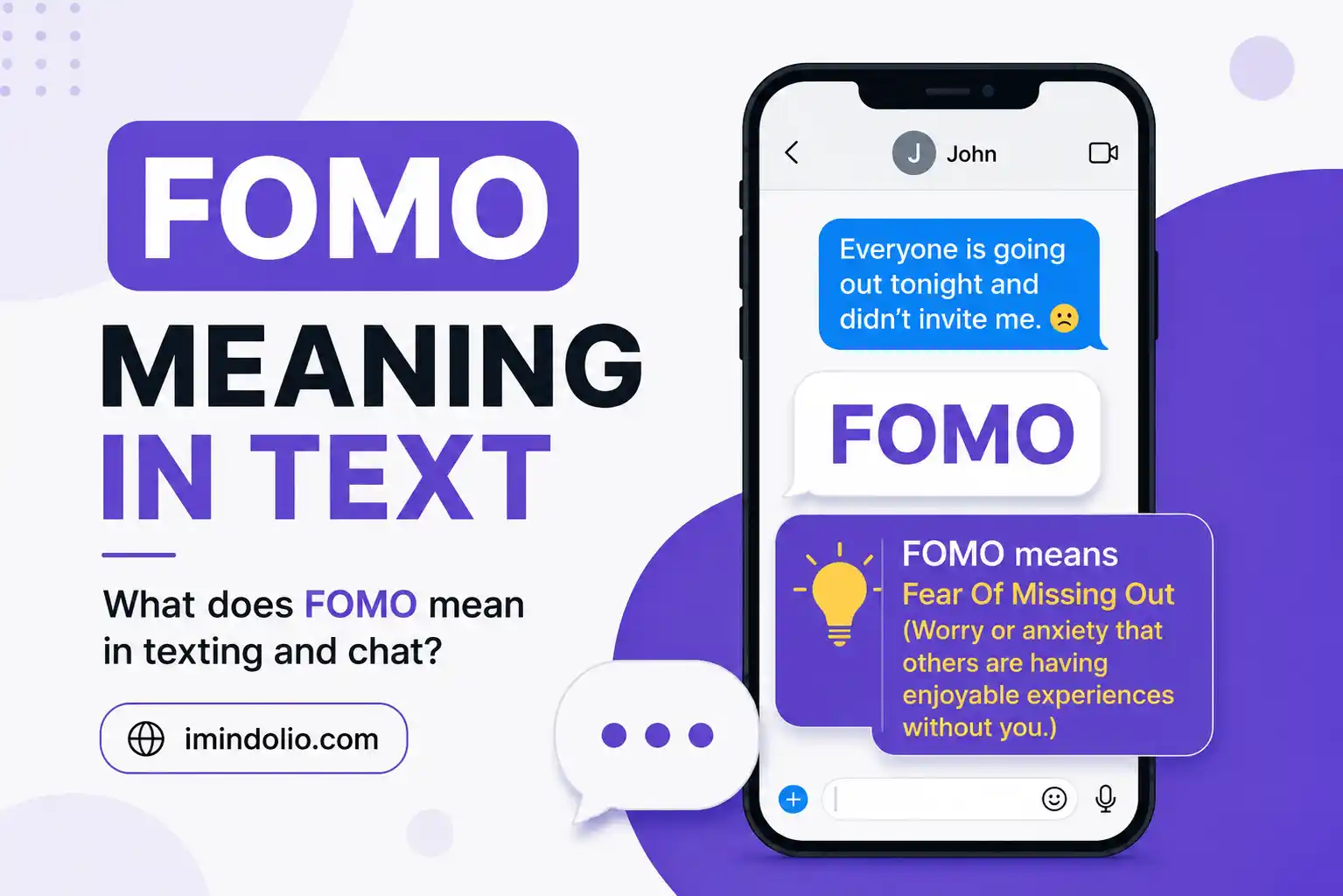
In texting and online conversations, FOMO stands for “Fear Of Missing Out.” It describes the feeling that other people are having enjoyable, exciting, or rewarding experiences while you are missing them.
FOMO is both an internet slang term and a real psychological concept.
Examples:
- “I got FOMO after seeing those vacation photos.”
- “Everyone went except me. FOMO is real.”
- “I’m joining because of FOMO.”
- “Those concert videos gave me serious FOMO.”
The term is often used when someone feels left out, excluded, or worried about missing a fun experience.
The Most Common Meanings of “FOMO”
1. FOMO = Fear Of Missing Out (Most Common Meaning)
This is the primary meaning of FOMO in texting and social media.
It describes anxiety or concern about missing experiences that others seem to be enjoying.
Examples:
- “I wasn’t planning to go, but FOMO changed my mind.”
- “The party photos gave me FOMO.”
- “Everyone’s talking about it, and now I have FOMO.”
2. FOMO on Social Media
Social media plays a major role in creating FOMO.
When people constantly see:
- Vacation photos
- Event highlights
- Success stories
- Lifestyle content
they may feel like everyone else is having more exciting experiences.
Examples:
- “Instagram is giving me FOMO today.”
- “TikTok travel videos always trigger my FOMO.”
3. FOMO in Everyday Life
FOMO isn’t limited to social media.
People can experience it in everyday situations.
Examples:
- Missing a concert
- Not attending a party
- Skipping a work event
- Missing a sale or promotion
Why Do People Use “FOMO” in Texting?
To Describe Social Feelings
FOMO is a quick way to explain feelings of exclusion or curiosity.
To Explain Decisions
People often use FOMO when explaining why they decided to participate in something.
Example:
“I bought tickets because of FOMO.”
Social Media Influence
Online platforms constantly expose people to other people’s activities.
Group Activities
Friends often use FOMO when discussing events and gatherings.
Modern Internet Culture
The term has become deeply embedded in digital communication.
Who Commonly Uses “FOMO”?
Teenagers & Gen Z
Younger users frequently discuss FOMO on social media.
Social Media Users
People who spend time on Instagram, TikTok, Snapchat, and YouTube commonly use the term.
Travelers
Travel-related content often triggers FOMO.
Students
Students may experience FOMO related to social events and campus activities.
Online Communities
Gaming groups, fan communities, and online forums regularly use the term.
How “FOMO” Is Used in Real Conversations
Friends & Casual Chats
Examples:
- “You’re giving me FOMO.”
- “I wish I had gone.”
- “Now I have serious FOMO.”
Instagram Comments
Examples:
- “This trip is giving me FOMO.”
- “The photos are amazing. FOMO!”
TikTok Discussions
Examples:
- “Travel TikTok always causes FOMO.”
- “These concert videos are pure FOMO.”
Group Chats
Examples:
- “Don’t make me feel FOMO.”
- “I should have joined.”
Workplace Conversations
Examples:
- “I missed the team lunch and got FOMO.”
- “Looks like everyone had fun.”
Event Planning Discussions
Examples:
- “I don’t want FOMO later.”
- “Count me in.”
Examples of “FOMO” in Sentences
Social Media Examples
- “Instagram is giving me FOMO today.”
- “Those beach photos created instant FOMO.”
- “Major FOMO from these stories.”
Travel Examples
- “I have travel FOMO.”
- “Those vacation pictures are causing FOMO.”
- “Everyone is exploring somewhere exciting.”
Friendship Examples
- “My friends went out without me and I got FOMO.”
- “The group chat is creating FOMO.”
Event Examples
- “I skipped the concert and now I have FOMO.”
- “The festival videos are giving me FOMO.”
Everyday Life Examples
- “Everyone’s trying the new restaurant and I’m getting FOMO.”
- “That limited-time sale created serious FOMO.”
What Causes FOMO?
Social Media Comparisons
People naturally compare their lives to others.
Fear of Being Left Out
Nobody likes feeling excluded.
Desire for New Experiences
Humans are naturally curious about exciting opportunities.
Peer Pressure
Friends and social groups can influence decision-making.
Constant Online Updates
Social media provides endless reminders of what other people are doing.
Difference Between FOMO and Similar Terms
| Term | Meaning |
| FOMO | Fear Of Missing Out |
| YOLO | You Only Live Once |
| JOMO | Joy Of Missing Out |
| Peer Pressure | Social Influence |
| Anxiety | General Worry |
FOMO vs YOLO
FOMO focuses on fear of missing experiences.
YOLO encourages taking opportunities.
Example:
“I bought the ticket because YOLO.”
FOMO vs JOMO
JOMO means Joy Of Missing Out.
Instead of feeling left out, a person enjoys staying home or skipping activities.
FOMO vs Anxiety
Anxiety is broader.
FOMO specifically relates to missing experiences or opportunities.
Is FOMO a Negative or Positive Thing?
Positive Side of FOMO
Motivation
FOMO can encourage people to try new things.
Trying New Experiences
It may push someone to explore opportunities.
Staying Connected
FOMO sometimes motivates people to stay involved socially.
Negative Side of FOMO
Anxiety
Constant comparison can create stress.
Stress
People may feel pressure to participate in everything.
Comparison Culture
Social media often presents unrealistic highlights.
Impulsive Decisions
Some people make poor decisions simply to avoid missing out.
How to Respond When Someone Says “FOMO”
Casual Replies
- “I get it.”
- “Same here.”
- “I understand.”
Friendly Replies
- “You’ll come next time!”
- “We’ll do it again soon.”
- “Don’t worry.”
Encouraging Replies
- “There will be more opportunities.”
- “You didn’t miss everything.”
Funny Replies
- “You didn’t miss much 😂”
- “The food wasn’t even that good.”
- “We’ll create new FOMO next week.”
Why FOMO Is So Popular Online
Social Media Growth
More content means more opportunities for comparison.
Influencer Culture
Influencers constantly showcase exciting experiences.
Constant Connectivity
People are always connected to updates.
Fear of Being Excluded
Humans naturally want social belonging.
Modern Digital Lifestyle
Technology makes it easier to see what others are doing.
Common Misunderstandings About “FOMO”
Thinking It Is Just Internet Slang
FOMO is also a recognized psychological concept.
Assuming Everyone Experiences It Equally
People experience FOMO at different levels.
Confusing It With Jealousy
Jealousy and FOMO overlap but aren’t identical.
Believing It Only Happens Online
FOMO existed long before social media.
Is FOMO Popular on Social Media in 2026?
TikTok Usage
Travel, lifestyle, and event content frequently generates FOMO.
Instagram Usage
Instagram remains one of the biggest drivers of FOMO.
Snapchat Usage
Real-time updates often create feelings of exclusion.
YouTube Communities
Vlogs and lifestyle videos regularly trigger FOMO.
Online Trends
The term remains highly relevant in 2026.
Similar Internet Slang Terms You Should Know
YOLO
You Only Live Once
Example:
“Let’s do it. YOLO.”
JOMO
Joy Of Missing Out
Example:
“I’m staying home and enjoying JOMO.”
NGL
Not Gonna Lie
Example:
“NGL, that’s impressive.”
FR
For Real
Example:
“That’s true fr.”
IDK
I Don’t Know
Example:
“IDK what happened.”
TBH
To Be Honest
Example:
“TBH, I agree.”
LOL
Laugh Out Loud
Example:
“LOL, that’s funny.”
BTW
By The Way
Example:
“BTW, thanks for helping.”
BRB
Be Right Back
Example:
“BRB, dinner time.”
SMH
Shaking My Head
Example:
“SMH, that’s disappointing.”
When You Should Avoid Using “FOMO”
Professional Reports
Formal writing usually requires more precise language.
Academic Writing
It’s better to explain the concept fully.
Formal Communication
Professional audiences may prefer detailed wording.
Serious Mental Health Discussions
Specific emotional concerns deserve more accurate explanations than slang terms.
Advantages and Disadvantages of Using “FOMO”
Advantages
- Easy to understand
- Widely recognized
- Describes a common feeling
- Popular across social media
- Efficient communication
Disadvantages
- Can oversimplify emotions
- Often linked to social comparison
- May encourage unhealthy habits
- Sometimes used too casually
How Social Media Has Increased FOMO
Instagram Lifestyle Content
People often share only their best moments.
TikTok Trends
Viral trends can make users feel left behind.
Influencer Marketing
Influencers frequently showcase aspirational lifestyles.
Real-Time Updates
Stories and live content create immediate comparisons.
Digital Comparison Culture
Modern technology constantly exposes people to others’ experiences.
You may be like it:
- SMT Meaning in Text : What It Really Means in 2026
- ASL Meaning in Text: What It Really Means in Messages, Chats
- BTW Meaning in Text: What It Really Means in Messages, Chats
- DW Meaning in Text: What It Really Means in Messages, Chats
- FFS Meaning in Text: What It Really Means in Messages, Chats
FAQs
What does FOMO mean in text?
FOMO means Fear Of Missing Out.
What is the full form of FOMO?
The full form is Fear Of Missing Out.
Is FOMO a real psychological concept?
Yes. It is widely recognized in psychology and behavioral research.
Why do people experience FOMO?
People experience FOMO when they feel they may be missing rewarding experiences.
Is FOMO caused by social media?
Social media can increase FOMO, but it isn’t the only cause.
What is the opposite of FOMO?
The opposite is JOMO (Joy Of Missing Out).
Is FOMO common among Gen Z?
Yes. It is particularly common among younger social media users.
Is FOMO still popular in 2026?
Yes. The term remains widely used online.
What is the difference between FOMO and jealousy?
FOMO focuses on missing experiences, while jealousy focuses on wanting what someone else has.
Final Thoughts
Understanding the FOMO meaning in text is important because the term has become a major part of modern digital communication. FOMO stands for Fear Of Missing Out and describes the feeling that others are enjoying rewarding experiences while you’re being left out.
Although social media has made FOMO more visible than ever, the emotion itself is a normal human experience. Most people feel it occasionally when they see friends, coworkers, or online creators participating in exciting activities.
The key is remembering that social media often highlights the best moments of people’s lives rather than the complete picture. Understanding FOMO can help you use social media more mindfully while staying connected to the experiences that truly matter to you.