
You’re having a conversation when someone suddenly replies with just:
“Hm…”
No explanation. No emoji. No extra words.
Now you’re left wondering what they actually mean.
Are they thinking? Confused? Annoyed? Interested?
Unlike many texting abbreviations that have one clear meaning, HM can express different emotions depending on the situation, tone, punctuation, and conversation. A simple “Hm” might signal curiosity, while “Hmm…” could suggest doubt or deep thought.
That’s why so many people search for “hm meaning in text” after receiving this short but often mysterious reply. In modern texting culture, even two letters can completely change the tone of a conversation.
Whether you’ve seen it in WhatsApp messages, Snapchat chats, Instagram DMs, TikTok comments, or group conversations, understanding HM can help you better interpret what someone is really trying to say.
What Does HM Meaning in Text?
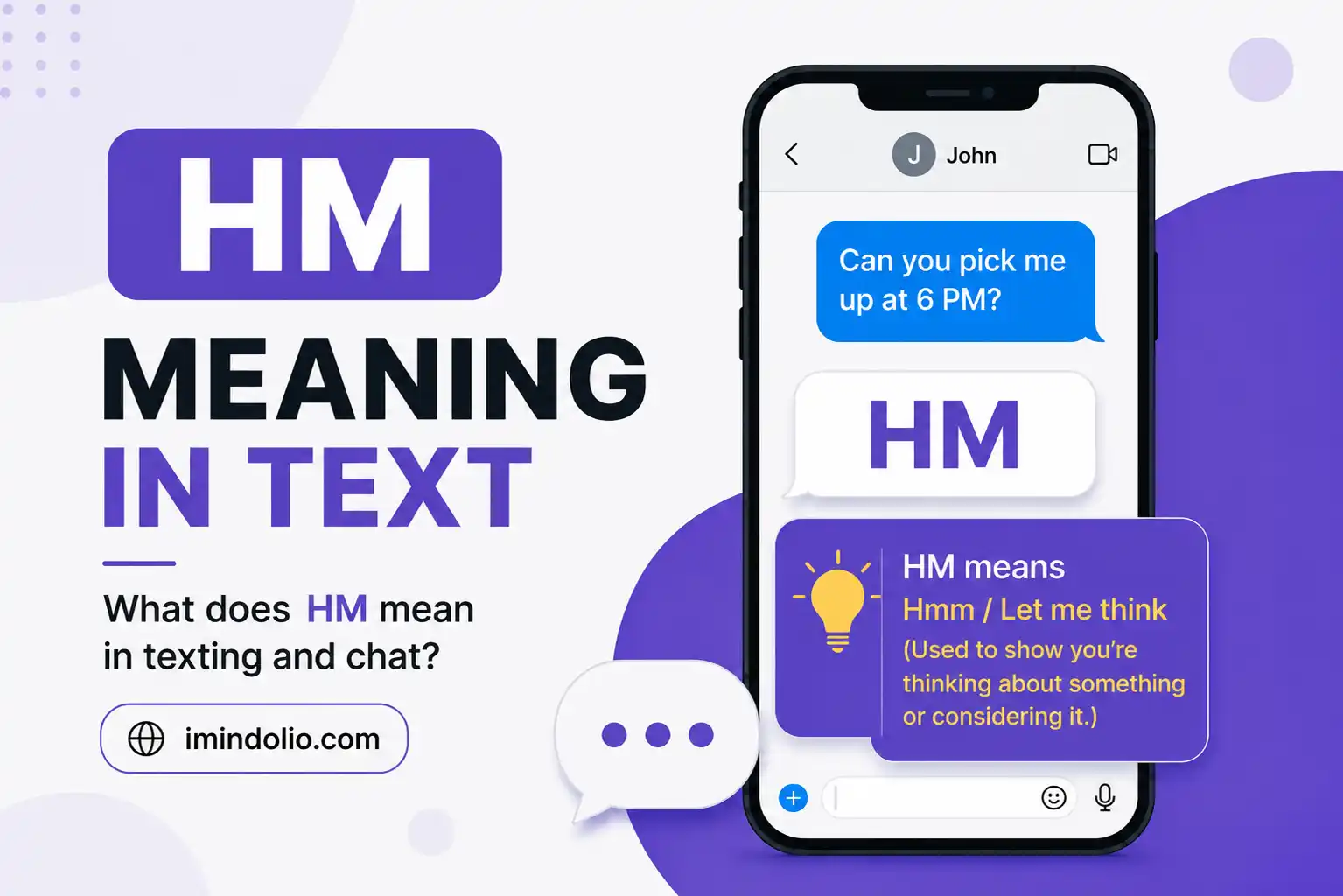
In texting and online conversations, HM is usually an expression of thinking, hesitation, uncertainty, curiosity, or consideration. People often use it when they are processing information or deciding how to respond.
Unlike abbreviations such as LOL or IDK, HM isn’t an acronym. Instead, it’s a text version of the sound people naturally make when they’re thinking.
Examples:
- “Hm, that’s interesting.”
- “Hm… I’m not sure.”
- “Hm, let me think.”
- “Hm, tell me more.”
The exact meaning depends heavily on context, punctuation, and the overall conversation.
The Most Common Meanings of “HM”
1. HM = Thinking or Considering Something (Most Common Meaning)
This is the most common use of HM in texting.
People use it when they’re processing information or considering a response.
Examples:
- “Hm, that’s a good point.”
- “Hm, I’ll have to think about that.”
- “Hm, maybe you’re right.”
In these situations, HM usually signals thoughtful consideration.
2. HM = Doubt or Uncertainty
Sometimes HM indicates uncertainty or hesitation.
Examples:
- “Hm… I’m not sure about that.”
- “Hm, maybe.”
- “Hm, I don’t know.”
The person may still be deciding what they think.
3. HM = Curiosity or Interest
HM can also express interest in learning more.
Examples:
- “Hm, that’s interesting.”
- “Hm, tell me more.”
- “Hm, how did that happen?”
This version usually feels positive and engaged.
4. HM = Mild Disagreement or Skepticism
Occasionally, HM suggests doubt or skepticism.
Examples:
- “Hm, are you sure?”
- “Hm… that sounds unlikely.”
- “Hm, I don’t know about that.”
In these cases, the person may not fully agree.
You may be like it:
- SMT Meaning in Text : What It Really Means in 2026
- ASL Meaning in Text: What It Really Means in Messages, Chats
- RCS Meaning In Text: Why More People Are Seeing It In Messages
- SFS Meaning In Text: Why People Use It On Snapchat And Social Media
Why Do People Use “HM” in Texting?
Quick Reaction
HM is an easy way to react without typing a long response.
Expressing Thoughtfulness
It communicates that someone is actively considering what’s been said.
Creating Suspense
Sometimes people use HM to build anticipation before giving their opinion.
Showing Uncertainty
It helps express indecision naturally.
Natural Conversation Flow
People often make thinking sounds in real life, and HM recreates that online.
Who Commonly Uses “HM”?
Teenagers & Gen Z
Younger users frequently use HM in casual conversations.
Social Media Users
HM appears regularly across social platforms.
Friends & Family
It’s common in everyday texting.
Online Communities
Forums, Discord servers, and group chats often feature HM.
Casual Chat Users
Anyone engaged in informal messaging may use it.
How “HM” Is Used in Real Conversations
Friends & Casual Chats
Examples:
- “Hm, that’s funny.”
- “Hm, maybe we should try that.”
WhatsApp Conversations
Examples:
- “Hm… I’ll think about it.”
- “Hm, not a bad idea.”
Snapchat Messages
Examples:
- “Hm, interesting.”
- “Hm 😂”
Instagram DMs
Examples:
- “Hm, I like that.”
- “Hm, tell me more.”
Online Discussions
Examples:
- “Hm, I see your point.”
- “Hm, that’s worth considering.”
Group Chats
Examples:
- “Hm, what does everyone else think?”
- “Hm, that changes things.”
Examples of “HM” in Sentences
Thinking Examples
- “Hm, I never thought about it that way.”
- “Hm, let me think.”
Curious Examples
- “Hm, that’s interesting.”
- “Hm, how does that work?”
Confused Examples
- “Hm… I’m confused.”
- “Hm, what do you mean?”
Skeptical Examples
- “Hm, are you sure?”
- “Hm… that doesn’t sound right.”
Friendly Examples
- “Hm, good idea.”
- “Hm, let’s do it.”
What Different Versions of “HM” Mean
Hm
A simple reaction or brief moment of thought.
Example:
“Hm, okay.”
Hmm
Usually suggests deeper thinking or uncertainty.
Example:
“Hmm, I’m not sure.”
Hmmm
Often indicates stronger curiosity or suspicion.
Example:
“Hmmm, that’s interesting.”
Hmmmm…
May suggest doubt, disbelief, or extended consideration.
Example:
“Hmmmm… are you telling the whole story?”
The more letters and punctuation added, the stronger the emotional tone often becomes.
Difference Between HM and Similar Texting Terms
| Term | Meaning |
| HM | Thinking / Considering |
| HMM | Deeper Thought |
| OH | Realization |
| IDK | I Don’t Know |
| TBH | To Be Honest |
HM vs HMM
HMM usually implies more thought than HM.
Example:
“Hmm, let me think.”
HM vs OH
OH often signals realization.
Example:
“Oh, now I understand.”
HM vs IDK
IDK directly expresses uncertainty.
Example:
“IDK the answer.”
HM suggests thinking rather than a lack of knowledge.
HM vs TBH
TBH introduces honesty.
Example:
“TBH, I agree.”
Is “HM” Positive, Negative, or Neutral?
Positive Use
HM can show curiosity and interest.
Example:
“Hm, that’s exciting.”
Neutral Use
Most HM messages are neutral.
Example:
“Hm, okay.”
Negative Interpretation
Sometimes HM can signal doubt or disagreement.
Example:
“Hm… I don’t know.”
Situations Where It Can Be Misunderstood
Because HM is vague, different people may interpret it differently.
Example:
“Hm.”
One person may see it as thoughtful, while another may think it sounds annoyed.
How to Respond When Someone Says “HM”
Casual Replies
- “What are you thinking?”
- “Anything else?”
Clarifying Replies
- “Do you agree?”
- “What do you mean?”
Friendly Replies
- “Tell me more.”
- “What’s on your mind?”
Funny Replies
- “That doesn’t sound convincing 😂”
- “You’re plotting something, aren’t you?”
Why “HM” Is So Popular Online
Easy to Type
Only two letters are needed.
Universal Expression
Most people understand the thinking sound.
Works Across Platforms
HM appears naturally on every messaging app.
Conveys Emotion Without Long Messages
It communicates thought quickly.
Common in Everyday Conversations
People use HM naturally both online and offline.
Common Misunderstandings About “HM”
Thinking It Is Always Negative
Most HM messages aren’t negative.
Assuming Someone Is Angry
HM often reflects thought rather than irritation.
Misreading Silence
Sometimes people simply need time to think.
Ignoring Conversation Context
Context is essential for understanding the intended meaning.
Is “HM” Popular on Social Media in 2026?
TikTok Comments
HM frequently appears in reaction comments.
Instagram Conversations
Users regularly use HM in DMs and comments.
Snapchat Messages
Short reactions remain common on Snapchat.
WhatsApp Chats
HM is frequently used among friends and family.
Online Communities
Forums and Discord servers continue using HM naturally.
In 2026, HM remains one of the simplest and most common text reactions online.
Similar Internet Slang Terms You Should Know
HMM
Expression of thinking.
Example:
“Hmm, maybe.”
OH
Realization.
Example:
“Oh, now I get it.”
IDK
I Don’t Know
Example:
“IDK.”
NGL
Not Gonna Lie
Example:
“NGL, that’s impressive.”
TBH
To Be Honest
Example:
“TBH, I agree.”
FR
For Real
Example:
“That’s true fr.”
LOL
Laugh Out Loud
Example:
“LOL, that’s funny.”
BRUH
Expression of disbelief.
Example:
“Bruh, seriously?”
SMH
Shaking My Head
Example:
“SMH, that’s disappointing.”
BTW
By The Way
Example:
“BTW, thanks.”
When You Should Avoid Using “HM”
Professional Emails
HM may seem vague or unclear.
Workplace Communication
Direct communication is often better.
Formal Discussions
Clear wording reduces misunderstandings.
Important Conversations
Specific responses are usually more helpful.
Customer Service Messages
Professional communication should avoid ambiguity.
Advantages and Disadvantages of Using “HM”
Advantages
- Quick and easy
- Expresses thoughtfulness
- Natural conversation filler
- Works in many situations
- Universally understood
Disadvantages
- Meaning depends on tone
- Easy to misunderstand
- Can seem vague
- Not ideal for formal communication
How Small Text Reactions Like HM Have Changed Communication
Rise of Short Messaging
People increasingly communicate through brief responses.
Social Media Influence
Platforms encourage fast interactions.
Faster Conversations
Short reactions keep chats moving.
Emotional Communication Through Text
Tiny expressions can carry significant emotional meaning.
Evolution of Online Language
Internet communication continues becoming more efficient.
FAQs
What does HM mean in text?
HM usually expresses thinking, consideration, uncertainty, curiosity, or hesitation.
Is HM the same as HMM?
They’re similar, but HMM often suggests deeper thought.
Is HM rude?
Usually no. Most uses are neutral or thoughtful.
What does “hm…” mean in a message?
It often suggests uncertainty, doubt, or ongoing consideration.
Why do people reply with HM?
They may be thinking, processing information, or deciding how to respond.
Is HM positive or negative?
It can be positive, neutral, or slightly skeptical depending on context.
How should I respond to HM?
You can ask:
- “What are you thinking?”
- “Do you agree?”
- “Tell me more.”
Is HM still commonly used in 2026?
Yes. It’s still widely used across messaging apps and social media.
What is the difference between HM and IDK?
HM suggests someone is thinking, while IDK directly means they don’t know.
Final Thoughts
Understanding the HM meaning in text is easier once you recognize that it isn’t a fixed abbreviation with one definition. In most conversations, HM expresses thinking, uncertainty, curiosity, consideration, or mild skepticism.
The exact meaning often depends on context, punctuation, and the overall tone of the conversation. A simple “Hm” may indicate casual thought, while “Hmmmm…” can suggest deeper consideration or doubt.
Because it’s quick, natural, and versatile, HM remains one of the most common text reactions across social media, messaging apps, and online communities. The next time someone replies with “Hm,” you’ll have a much better idea of what they might be thinking.